Strange, Sweet, and Showing Up Everywhere: How Jackfruit, Dragon Fruit, and Other Tropical Underdogs Are Landing on American Tables
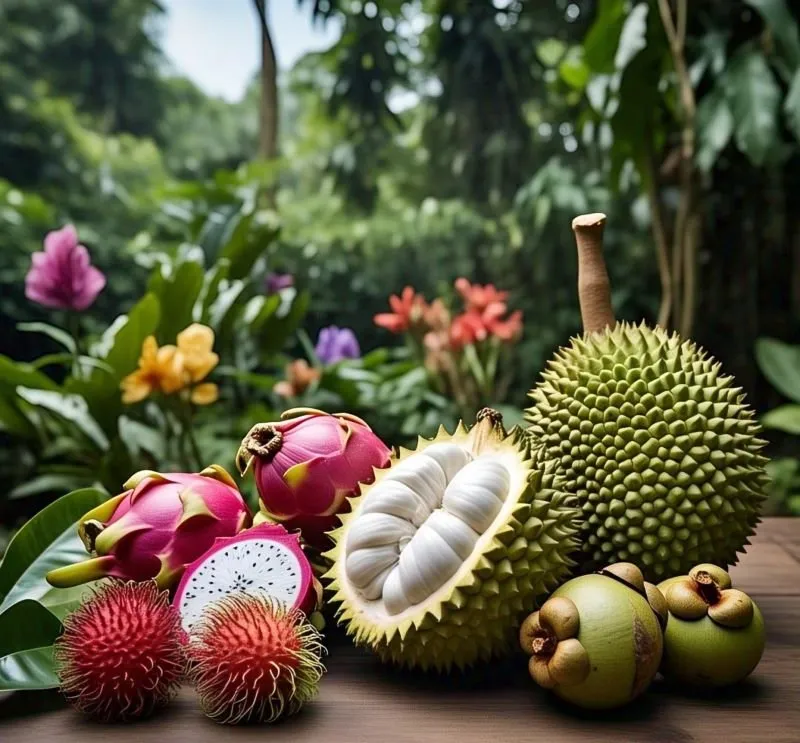
Photo: fresh jackfruit dragon fruit rambutan tropical fruits on market display, via fruitpath.com
For a long time, if you wanted jackfruit in the United States, you had two options: fly somewhere tropical, or haunt the canned goods aisle of an Asian grocery store and hope for the best. Dragon fruit was a curiosity—something you photographed at a resort buffet and then weren't quite sure how to eat. Rambutan? Completely off the radar for most American home cooks.
That's changing, and faster than most food writers expected. The combination of a more globally connected food supply chain, a growing diaspora population bringing demand with it, and a mainstream appetite for plant-forward eating has pushed these once-exotic fruits into a genuinely accessible position. They're at Whole Foods. They're at Costco. They're at farmers markets in states that have no business growing them—sold by specialty importers who figured out refrigerated logistics.
But availability is only half the equation. The other half is knowing what to do with them once you get them home.
What's Actually Driving the Shift
It helps to understand why this is happening now rather than ten years ago. A few forces are converging at once.
First, the plant-based protein movement created a massive opening for jackfruit specifically. Young, unripe jackfruit has a fibrous, meaty texture that shreds almost exactly like pulled pork when cooked low and slow. Once food brands and restaurant chains started promoting it as a meat alternative around 2018 and 2019, consumer curiosity exploded. People who had never thought about jackfruit suddenly wanted to know everything about it.
Second, the visual appeal of dragon fruit became a genuine marketing asset in the social media era. That hot-pink flesh with white or red interior and tiny black seeds photographs spectacularly. Smoothie bowl culture, which exploded on Instagram and TikTok, turned dragon fruit powder and fresh dragon fruit into staple ingredients almost overnight.
Third—and this is the food science piece that doesn't get talked about enough—cold chain logistics have improved dramatically. Tropical fruits are notoriously difficult to ship without degradation. Better refrigeration technology, faster air freight routes, and improved post-harvest handling mean that a dragon fruit picked in Vietnam or a rambutan from Thailand can actually arrive in the US in edible condition now, rather than as an overripe, bruised disappointment.
Getting to Know the Fruit
Jackfruit: The Versatile Giant
Jackfruit is the largest tree fruit in the world, and it has two completely different culinary identities depending on when it's harvested. Young, green jackfruit is mild and starchy, with that famous pulled-meat texture that makes it a star in tacos, sandwiches, and grain bowls. Ripe jackfruit is sweet, fragrant, and almost candy-like—closer to a mix of mango, pineapple, and banana in flavor.
For savory cooking, canned young jackfruit in brine (not syrup—read the label carefully) is your most reliable starting point. Drain it, shred it with a fork, and season it like you would any braised meat. For sweet applications, look for ripe fresh jackfruit at Asian grocery stores or specialty markets. The pods inside, once you get past the sticky latex exterior, are ready to eat as-is or blend into smoothies and desserts.
Practical starting point: Jackfruit carnitas tacos. Season shredded canned jackfruit with cumin, smoked paprika, garlic, and a squeeze of orange juice. Sear it in a hot pan until the edges crisp up. Serve in corn tortillas with mango salsa and pickled red onion. It's genuinely impressive and costs about a third of what pulled pork would.
Dragon Fruit: More Than a Pretty Face
Here's the honest truth about dragon fruit that most food content glosses over: its flavor is mild. Genuinely mild. It's lightly sweet, faintly floral, and has a texture similar to kiwi—juicy and speckled with those distinctive seeds. If you bite into a dragon fruit expecting the flavor intensity of its color, you'll be underwhelmed.
But that mildness is actually a feature, not a bug. Dragon fruit plays beautifully as a base in smoothies and smoothie bowls because it doesn't compete with stronger flavors—it lets mango, pineapple, or coconut take the lead while adding body, color, and a gentle sweetness. The red-fleshed varieties (Hylocereus costaricensis) have a slightly more pronounced flavor and a stunning magenta color that turns anything it touches a vivid pink.
From a nutrition standpoint, dragon fruit is a solid source of fiber, vitamin C, and several antioxidants. The betacyanins that give red dragon fruit its color have been studied for anti-inflammatory properties, though you'd need to eat a meaningful amount to see clinical effects.
Practical starting point: Dragon fruit breakfast parfait. Layer frozen red dragon fruit chunks (widely available in the frozen fruit aisle) with Greek yogurt and a honey-lime drizzle. Top with toasted coconut flakes and granola. It takes five minutes and looks like something from a boutique café.
Rambutan: The Friendlier Lychee
If you've had lychee—in a cocktail, a bubble tea, or a can—you already have a rough idea of what rambutan tastes like. It's sweeter and slightly less floral than lychee, with a juicy, translucent flesh surrounding a central pit. The hairy red exterior is intimidating until you realize it peels open with a simple squeeze and a thumbnail.
Fresh rambutan is becoming more common at Asian grocery stores and some farmers markets in coastal cities. Canned rambutan in syrup is a pantry-friendly alternative. Either way, it's an easy entry point: eat it straight as a snack, add it to fruit salads, or use it as a topping for coconut rice pudding.
Guanabana (Soursop): The Creamy Outlier
Guanabana—also called soursop—is harder to find fresh in the US, but frozen guanabana pulp is increasingly available at Latin grocery stores and online retailers. Its flavor is genuinely unique: creamy, tangy, and tropical, somewhere between pineapple and strawberry with a custard-like richness. It makes extraordinary agua fresca, ice cream, and smoothies.
The supply chain for fresh soursop is still catching up in the US, partly because the fruit bruises easily and has a short shelf window. Frozen pulp is the reliable workaround for now.
A Few Buying Tips That Actually Matter
For fresh tropical fruits, ripeness cues matter more than they do with familiar produce. A ripe jackfruit gives slightly when pressed and has a strong, sweet fragrance. Dragon fruit should feel firm but not rock-hard, with bright, evenly colored skin. Rambutan should have flexible (not brittle) hairs and vibrant red skin.
Don't overlook the frozen aisle. Frozen tropical fruit is picked at peak ripeness and flash-frozen, which often makes it nutritionally superior to fresh fruit that's been sitting in a distribution chain for two weeks. For smoothies, bowls, and cooked applications, frozen is frequently the smarter choice.
The Bigger Picture
What's really happening here isn't just a food trend. It's a gradual recalibration of what "everyday American cooking" looks like—one that increasingly reflects the full range of flavors and ingredients that have been central to cooking in Latin America, Southeast Asia, and the Caribbean for generations.
These fruits aren't exotic curiosities. They're just fruits that are finally getting the distribution they deserve. And once you work a few of them into your regular rotation, you'll wonder why it took this long.