Why Your Brain Goes Wild for Mango and Coconut: The Delicious Science of Tropical Cravings
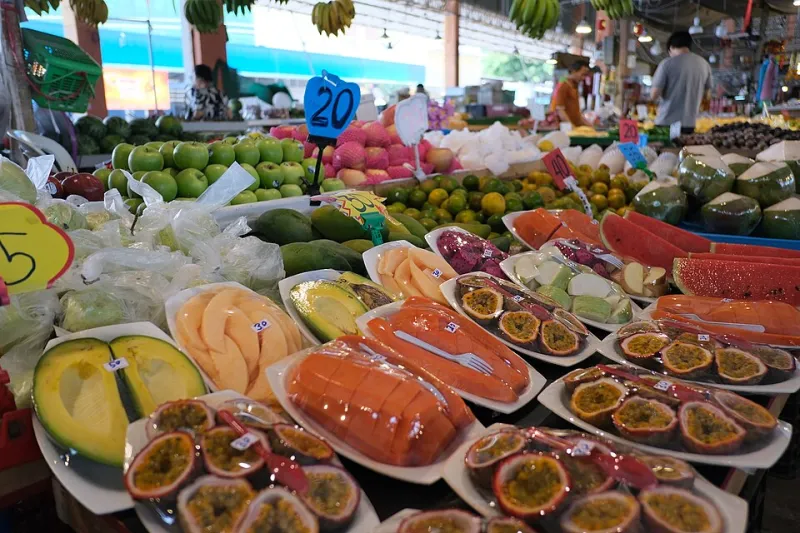
Photo: PattayaPatrol, CC BY-SA 4.0, via Wikimedia Commons
Picture this: you're standing in the middle of a grocery store in Ohio or Arizona, nowhere near a beach, and you catch a faint whiff of ripe mango from the produce section. Suddenly, something in you just lights up. Your mood ticks upward. You reach for it without even thinking. What's going on in there?
The answer lives somewhere between chemistry, neuroscience, and a little bit of everyday magic. At Sunny Days Hana Fru, we're all about celebrating the natural beauty of tropical and floral flavors — so we went deep on the science to understand exactly why these tastes have such a powerful hold on us.
It All Starts With Your Nose (Seriously)
Here's something that surprises a lot of people: roughly 80 percent of what we perceive as "taste" is actually smell. Your tongue can only detect five basic sensations — sweet, salty, sour, bitter, and umami. Everything else, all that lush complexity in a ripe passion fruit or a fresh slice of coconut, is processed by your olfactory system.
When you bite into a mango, volatile aromatic compounds — tiny molecules that evaporate easily at room temperature — travel up through the back of your mouth into your nasal cavity. This process, called retronasal olfaction, is where the real flavor experience happens. Food scientists have identified over 270 distinct volatile compounds in ripe Alphonso mangoes alone. The ones most responsible for that unmistakable tropical punch include compounds like myrcene, terpinolene, and the evocatively named "furaneol," which carries warm, caramel-like undertones.
Passion fruit has its own wild aromatic fingerprint. Its signature scent comes largely from a group of compounds called esters and terpenes, with one called ethyl butanoate playing a starring role. That compound also appears in pineapple and certain strawberry varieties — which might explain why passion fruit feels both exotic and somehow familiar at the same time.
The Brain's Reward System and Tropical Sweetness
Tropical fruits tend to be high in natural sugars and often carry bright, acidic notes alongside that sweetness. That combination — sweet plus tart — is genuinely compelling to the human brain. When you eat something sweet, your brain releases dopamine, the same feel-good neurotransmitter linked to pleasure and motivation.
But it's not just the sugar. Research in sensory neuroscience suggests that novel flavor combinations activate the brain's reward pathways more intensely than familiar ones. Tropical fruits, for many Americans who didn't grow up eating them regularly, still carry that quality of novelty. Each encounter with passion fruit or jackfruit can feel like a small adventure — and your brain rewards you for it.
Coconut is a particularly interesting case. It contains medium-chain triglycerides (MCTs), a type of fat that the body processes differently than most dietary fats, converting them to energy relatively quickly. Some researchers believe this efficient energy delivery contributes to the sense of satisfaction — almost comfort — that many people associate with coconut-based foods and drinks.
Social Media, Travel, and the Normalization of Tropical Taste
Science aside, culture plays an enormous role in shaping what we crave. Over the last decade, tropical flavors have made a massive leap into everyday American eating — and social media deserves a big chunk of the credit.
Think about the acai bowl. Ten years ago, most people in the continental US had never heard of it. Then Instagram happened. Suddenly, those vibrant purple bowls topped with dragon fruit slices and toasted coconut were everywhere, and Americans decided they were absolutely necessary. The visual appeal of tropical ingredients — the vivid pinks, oranges, and yellows — makes them exceptionally shareable online, which in turn creates cultural familiarity and demand.
Travel trends have amplified this too. As more Americans have visited Hawaii, Costa Rica, Thailand, and the Caribbean, they've come home with a genuine taste memory for these flavors. Food scientists call this "flavor imprinting" — when a flavor is experienced in a positive, emotionally charged context (hello, vacation), it creates a strong, lasting preference. You're not just craving the mango; you're craving the memory attached to it.
Food manufacturers and chefs have taken notice. The global tropical fruit market has been growing steadily, and in the US, tropical flavor profiles are now appearing in everything from mainstream sparkling waters to craft cocktails to morning yogurts. What was once considered exotic is rapidly becoming part of the American flavor vocabulary.
Why Floral Notes Hit Different
Beyond fruit, floral flavor compounds have their own neurological story. Hibiscus, elderflower, and butterfly pea flower have surged in popularity in American beverages and desserts — and it's not just about aesthetics, though the colors are undeniably stunning.
Floral aromas are often processed in brain regions closely linked to emotional memory. The olfactory bulb connects directly to the amygdala and hippocampus — the parts of your brain responsible for emotion and memory. This is why a floral scent can conjure a vivid memory or an unexpected emotional response almost instantly. A sip of hibiscus tea might remind you of your grandmother's garden or a summer afternoon in a way that's hard to articulate but deeply felt.
Linalool, a compound found in lavender and many tropical flowers, has been studied for its calming effects. Geraniol, present in rose and some citrus blossoms, has a bright, uplifting quality. When floral notes appear in food and drink, they're not just adding complexity — they're genuinely influencing how you feel.
Your Cravings Are Telling You Something
So the next time you find yourself reaching for a passion fruit sparkling water or adding mango to your morning smoothie, know that your brain is doing something pretty sophisticated. It's responding to a complex cocktail of aroma compounds, rewarding you with dopamine, drawing on emotional memories, and maybe even picking up on something nutritionally valuable.
At Sunny Days Hana Fru, we think that's worth celebrating. Tropical and floral flavors aren't just trendy — they're tapping into something genuinely human. The way these ingredients make us feel isn't accidental. It's chemistry, memory, and joy all wrapped up in one beautiful, sun-ripened package.
And honestly? We're here for every single bite of it.