Beyond the Coconut: Surprising Tropical Oils and Butters That Are Quietly Changing How We Cook
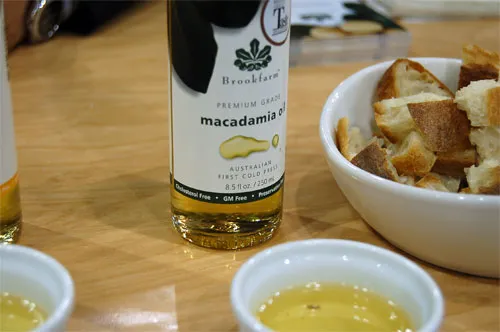
Photo: Gerald (Flickr user: foodite), CC BY 2.0, via Wikimedia Commons
Coconut oil had a solid decade in the spotlight. It showed up in everyone's smoothies, got spread on toast, replaced butter in a thousand baking experiments, and became the go-to shorthand for "healthy tropical fat." And honestly? It earned some of that attention. But the tropical world has more to offer than one fruit's oil, and chefs who spend time working with ingredients from South America, Southeast Asia, and the Pacific have known this for a while.
A quieter shift is happening in American kitchens right now. Specialty grocers, online retailers, and a growing number of restaurant supply chains are stocking oils and butters that most home cooks haven't heard of yet — and the ones who've tried them are not going back to a plain jar of coconut oil without at least a little hesitation.
Let's talk about three of the most interesting ones.
Babassu Oil: The Coconut Oil You've Never Tried
Babassu palms grow wild across Brazil's Amazon and Cerrado regions, and the oil pressed from their seeds has been a staple ingredient in Brazilian cooking and traditional medicine for generations. In the United States, it's mostly shown up in natural beauty products — hair masks, skin lotions, that kind of thing — but food-grade babassu oil is a different story worth telling.
Flavor-wise, babassu is lighter than coconut oil. It shares a similar fatty acid profile (high in lauric acid, which gives coconut oil its characteristic richness), but the taste is noticeably more neutral. Where coconut oil can sometimes announce itself in a recipe — especially in savory dishes where you don't necessarily want a tropical note — babassu stays quiet. It does the functional job of a solid fat without dominating the flavor of whatever you're cooking.
At room temperature, babassu is solid, similar to coconut oil or refined palm. It melts quickly at body temperature, which is part of why the beauty industry loves it, but that same quality makes it melt evenly and smoothly in a hot pan. For sautéing vegetables, making a roux, or greasing a baking pan, it performs beautifully.
Best uses in the kitchen:
- Sautéing aromatics (garlic, onion, peppers) when you want a clean fat that won't interfere with delicate flavors
- Greasing cake pans and muffin tins as a dairy-free alternative to butter
- Stirred into oatmeal for richness without coconut flavor
- As a base for dairy-free frostings or ganache where coconut flavor would be distracting
If you can find food-grade babassu oil online (a few Brazilian import brands and natural food retailers carry it), it's worth picking up a small jar to experiment with. It's a genuinely useful pantry addition rather than a novelty.
Cupuaçu Butter: The Chocolate-Adjacent Tropical Fat Worth Knowing
Cupuaçu (pronounced koo-poo-AH-soo) is a fruit from the Amazon basin, closely related to cacao. Its seeds yield a butter that's been described as tasting somewhere between white chocolate and tropical fruit — which sounds like marketing copy until you actually try it, and then it makes complete sense.
Cupuaçu butter is solid at room temperature with a melting point slightly lower than cacao butter. It's rich, subtly sweet, and carries a mild chocolatey-fruity aroma that's genuinely lovely. In professional pastry kitchens, it's started appearing as a partial substitute for cacao butter in chocolate work and confections, and it holds temper reasonably well for those applications.
For home cooks, the most accessible uses are in baking and no-bake desserts. Melted into a homemade energy ball mixture, it adds richness and a faint complexity that regular coconut oil doesn't deliver. Blended into a dairy-free mousse or truffle filling, it creates a silkier texture than many plant-based alternatives.
It's also surprisingly good in savory contexts — a small amount melted over roasted sweet potatoes or stirred into a butternut squash soup adds a rounded, almost nutty warmth without tasting like dessert.
Best uses in the kitchen:
- No-bake energy balls and bars
- Dairy-free truffle fillings and chocolate bark
- Stirred into hot beverages for a creamy, chocolatey richness (think a tropical twist on a cacao latte)
- Melted over roasted root vegetables for unexpected depth
- Homemade lip balm if you end up with extra — it's exceptional for that too
Cupuaçu butter is available from several online retailers specializing in raw or natural ingredients. Look for unrefined versions for the fullest flavor.
Macadamia Nut Oil: The Understated Workhorse
Of the three oils here, macadamia nut oil is probably the easiest to find and the most immediately useful for everyday cooking. It's pressed from the same macadamia nuts you already know and like, and it tastes the way you'd hope — buttery, mild, with a gentle nuttiness that doesn't overpower whatever you're making.
What makes macadamia oil particularly interesting from a culinary standpoint is its high smoke point (around 410–425°F for refined versions) combined with that pleasant flavor. Most neutral oils with high smoke points taste like nothing, which is fine for high-heat cooking but doesn't add anything. Macadamia oil gives you the heat tolerance you need for searing, roasting, and stir-frying while contributing a soft, buttery background note that genuinely improves the finished dish.
Chefs who've started using it talk about it the way cooks talk about good butter — it makes things taste a little more rounded and complete without calling attention to itself. That's a useful quality in a cooking fat.
For cold applications, macadamia oil makes a beautiful salad dressing base. Whisk it with citrus juice, a little honey (tropical flower honey, ideally), and fresh herbs for a dressing that tastes significantly more interesting than a standard olive oil vinaigrette.
Best uses in the kitchen:
- High-heat sautéing and stir-frying
- Roasting vegetables (try it on cauliflower or Brussels sprouts)
- Homemade salad dressings and marinades
- Drizzled over finished dishes as a finishing oil
- Baking in place of butter or standard neutral oil for added depth
Macadamia oil is available at many Whole Foods locations, Sprouts, and online. Hawaiian-produced versions tend to be especially well-regarded for flavor.
How to Start Experimenting Without Overwhelming Your Pantry
You don't need to overhaul your entire kitchen setup to try any of these. The easiest approach is to pick one and use it as a direct substitute in a recipe you already make regularly. Swap your usual cooking fat for babassu oil in a weeknight stir-fry. Try macadamia oil in your next salad dressing. Melt a small amount of cupuaçu butter into your morning oatmeal or a batch of homemade granola bars.
The point isn't to replace everything in your pantry at once — it's to gradually build a more interesting toolkit. Each of these oils and butters brings something genuinely different to the table, and once you've cooked with them a few times, you'll start developing an instinct for which one fits which dish.
Coconut oil isn't going anywhere, and it doesn't need to. But the tropical world is bigger than one palm fruit, and your cooking can reflect that.