Same Fruit, Totally Different Flavor: What American Soil Is Doing to Mangoes, Cacao, and Passion Fruit
You've probably heard the word terroir tossed around in wine conversations — that French concept suggesting a glass of Pinot Noir from Burgundy will taste fundamentally different from one grown in Oregon, even if it's technically the same grape. For decades, that idea lived almost exclusively in the wine world. But something interesting is happening on small farms in Hawaii, South Florida, and coastal California that's pushing terroir into a whole new territory: tropical fruit.
And honestly? The results are kind of mind-blowing.
What Terroir Actually Means (Outside of a Wine Glass)
At its core, terroir is just the sum of environmental factors that shape a crop's flavor — soil mineral content, rainfall patterns, ambient temperature swings, altitude, humidity, even the microorganisms living in the dirt. Grapes are famously sensitive to all of it. But tropical fruits, it turns out, aren't far behind.
The science here is rooted in something called secondary metabolites — the chemical compounds plants produce in response to their growing environment. When a mango tree is stressed by volcanic soil with high mineral acidity, or when a cacao pod matures slowly at elevation with cool nights, the plant compensates by producing a richer, more complex cocktail of flavor compounds. Think of it as the fruit working harder, and tasting better for it.
Dr. Miriam Castillo, a plant physiologist who consults with small-scale tropical farms in Hawaii, puts it simply: "Tropical plants evolved in enormously diverse ecosystems. They're incredibly responsive to their environment. When you move them into a new geography with different stressors — different light intensity, different soil chemistry, different diurnal temperature ranges — the flavor expression shifts in ways that can be genuinely surprising."
Hawaii's Volcanic Advantage
Few places in the United States offer more dramatic growing conditions than the Hawaiian islands. The volcanic basalt soils on the Big Island and Maui are rich in trace minerals — iron, magnesium, potassium — that influence everything from fruit acidity to aromatic intensity.
Take Ka'ū mangoes from the southern Big Island, grown at elevations between 1,000 and 2,000 feet. The cooler nights and slower ripening process that come with altitude give these fruits a distinctly different flavor profile from their lowland counterparts. Tasters routinely describe them with notes more commonly associated with stone fruit — a kind of peachy, almost floral depth — alongside the classic tropical sweetness. The flesh has a lower water content too, which concentrates the sugars and aromatics in a way that flat, hot growing conditions simply don't produce.
Cacao grown in the same region tells an equally compelling story. Hawaiian cacao, particularly from farms in the Kona and Hamakua districts, has earned serious attention from craft chocolate makers on the mainland. The volcanic soil imparts a subtle earthiness, while the island's humidity and temperature variation during fermentation — a critical step in cacao flavor development — creates chocolate with bright citrus and red fruit notes that most mass-market cacao never achieves. Some specialty chocolate bars made from Hawaiian-grown beans have been compared in blind tastings to fine Ecuadorian or Madagascan origin chocolates. That's not a small thing.
Florida's Humid Complexity
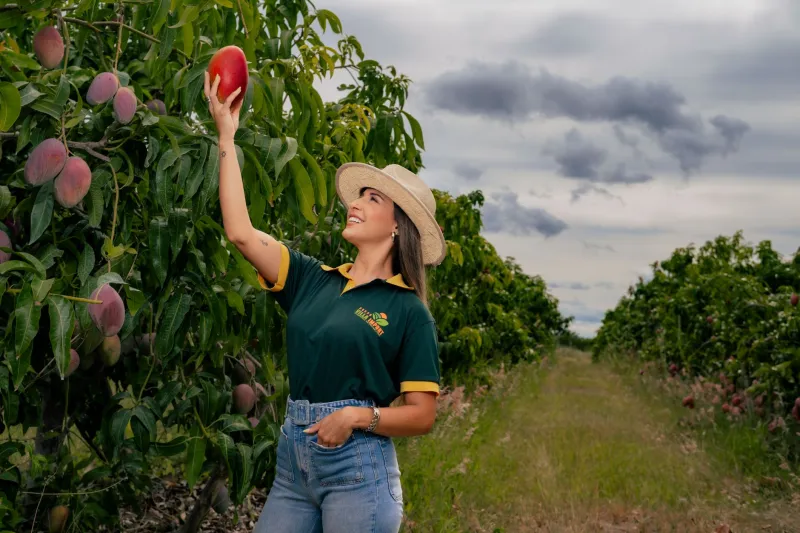
Florida might not have volcanic mountains, but it has something equally powerful: an extraordinary range of microclimates packed into a relatively small geographic footprint. The limestone-rich soils of Miami-Dade County's Redland agricultural district, for instance, produce mangoes that growers and chefs describe as having a savory, almost herbal edge underneath the sweetness — something attributed partly to the high calcium carbonate content in the soil and partly to the subtropical humidity that keeps the fruit on the tree longer.
Passion fruit grown in Central Florida's slightly cooler inland zones develops a tartness and aromatic punch that growers say surpasses what they've tasted from imports. The longer, more variable growing season seems to push the fruit toward a more layered flavor — less one-note tropical candy, more complex and wine-like on the finish.
Farm owner Lisette Moreno, who grows a mix of exotic passion fruit varieties on a small plot outside Homestead, Florida, describes the difference bluntly: "When I first started selling at farmers markets, people would taste my passion fruit and ask me what I added to it. Nothing. That's just what the soil here does."
California's Coastal Influence
Southern California's avocado belt — running from San Diego County up through Ventura — has long been famous for producing fruit with a creamier, nuttier profile than Hawaiian or Mexican-grown varieties. That same logic is now being applied to less common tropical crops.
Small farms in the Fallbrook and Valley Center areas of San Diego County have been experimenting with cherimoya, white sapote, and even lowland cacao varieties. The Mediterranean-adjacent climate — warm days, reliably cool nights, and low humidity — creates growing conditions that slow fruit development and concentrate flavors in ways that humid tropical climates don't allow. Cherimoyas grown here develop a custard-like richness with subtle vanilla and pineapple notes that growers say is noticeably different from Peruvian imports.
The ocean influence matters too. Coastal fog keeps temperatures moderate during critical ripening windows, and the salt-laced air has been hypothesized — though not yet fully studied — to influence the aromatic compounds in fruit skin and flesh.
Why This Matters for Your Kitchen
So what does all of this mean practically, if you're standing in a farmers market or browsing a specialty grocer?
It means origin matters. A lot. When you see a mango labeled "Ka'ū grown" or a passion fruit identified as coming from a specific Florida farm, those aren't just marketing details — they're flavor clues. American-grown tropical fruits from boutique producers are increasingly worth seeking out, not as novelties, but as genuinely distinct flavor experiences.
For cooking and baking, the implications are real. A more complex, less aggressively sweet mango might hold up better in a savory salsa or a vinaigrette. A Hawaiian cacao with bright citrus notes will behave differently in a ganache than a flatter, more neutral commercial variety. Knowing your source gives you a creative edge.
The Bigger Picture
There's something quietly exciting happening in American tropical farming right now. A generation of small-scale growers — many of them first-generation farmers, many of them obsessively detail-oriented about soil health and microclimate management — are essentially running an ongoing flavor experiment across three very different American geographies.
The results are still unfolding. But the early tasting notes suggest that American soil, in all its volcanic, limestone, and coastal variety, has something genuinely interesting to say about tropical flavor. And for anyone who loves eating well, that's a conversation worth paying attention to.